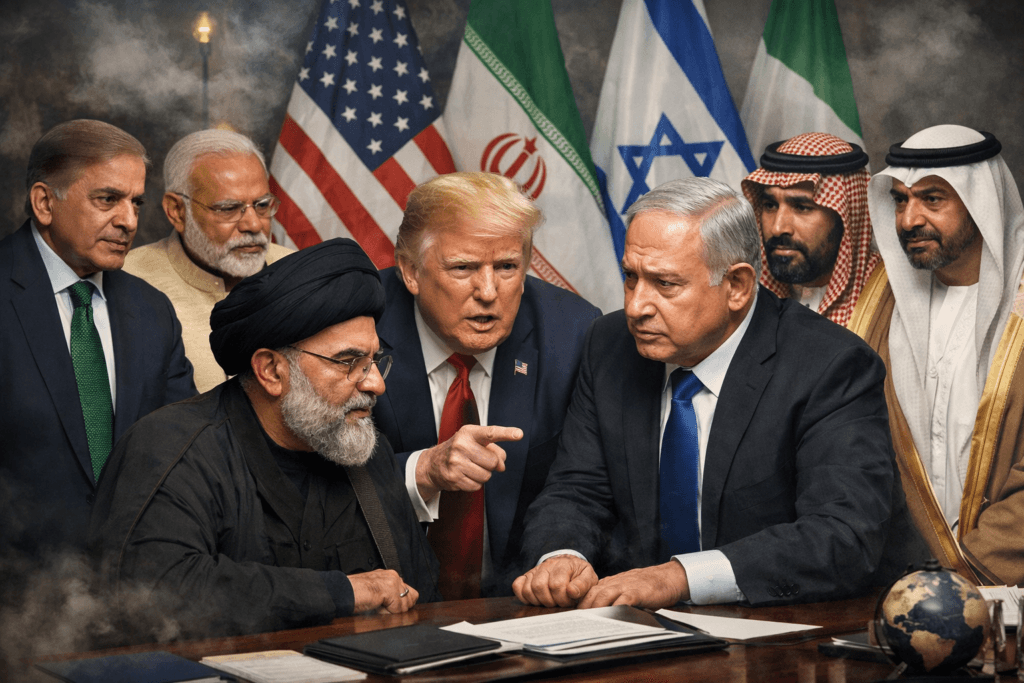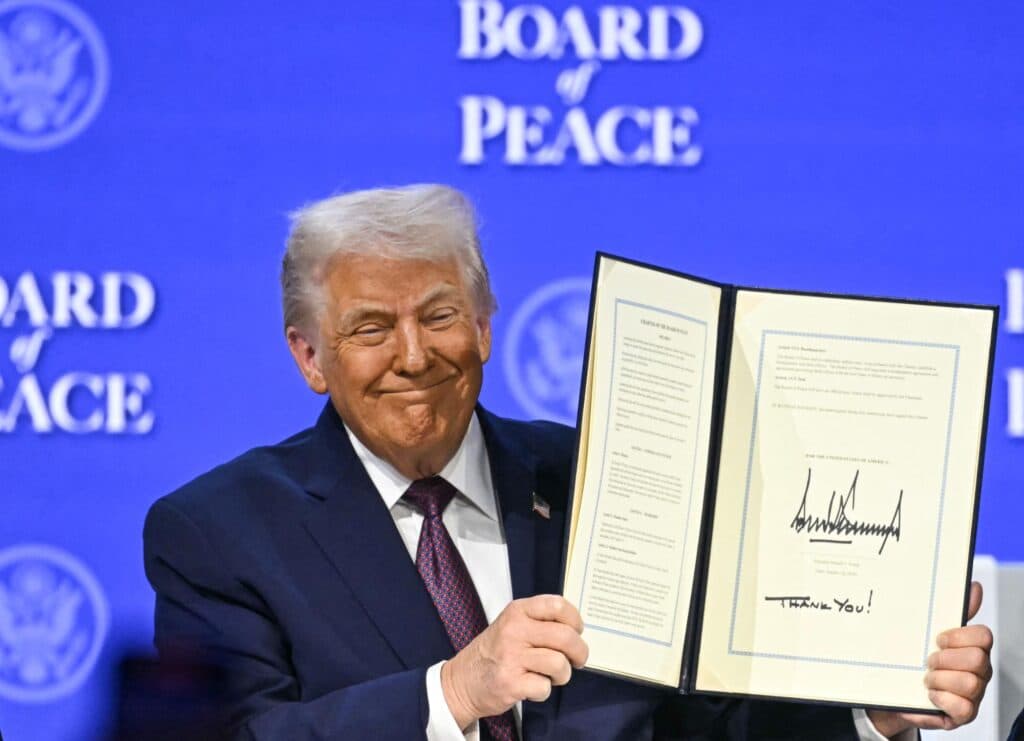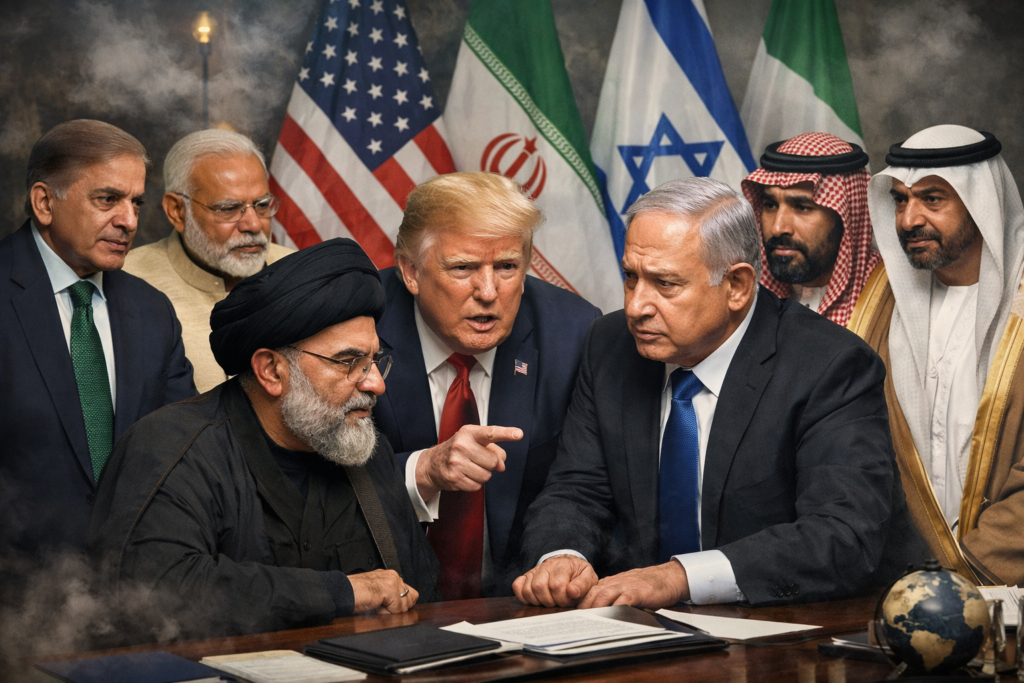
There’s a phrase quietly doing the rounds: TACO — Trump Always Chickens Out. It sounds unserious, but looking at the current US–Iran ceasefire, it starts to feel like a pattern rather than a punchline.
Because after weeks of escalation, airstrikes, and threats of wider war, we are back to something very familiar, negotiations over the same issue that triggered the conflict in the first place.
And that raises a simple but uncomfortable question:
What exactly was the war for?
The United States and Israel justified their military action against Iran on one clear ground uranium enrichment. It was presented as a non-negotiable red line. Iran’s nuclear programme was framed as a threat that had to be stopped, not discussed.
But now, after a fragile two-week ceasefire, Iran’s 10-point peace proposal is on the table and at its centre is the right to enrichment.
This is not speculation. Even within the ceasefire framework, reports suggest that the US is engaging with proposals that include sanctions relief, security guarantees, and recognition of Iran’s nuclear position.
So the contradiction is clear:
If enrichment was unacceptable before the war, how did it become negotiable after it?
This is where the idea of TACO becomes more than a joke.
Trump has not openly admitted any shift. He continues to call the ceasefire a “total victory.” But the reality is visible in the process—a move from hardline positions to flexible negotiations.
And this is not new.
The United States followed a similar path in Afghanistan—entering with absolute objectives and eventually negotiating its exit with the very forces it once refused to recognise.
The pattern is hard to ignore:
Set a strong red line- use force to enforce it – then negotiate around it.
Both sides are claiming success.
The US says military pressure forced Iran to the table.
Iran says it resisted pressure and pushed its own framework forward. Even within the ceasefire, both sides have presented the outcome as a victory to their domestic audiences.
But if you step back, the picture looks different.
Iran has not given up enrichment.
The US has not eliminated the nuclear issue.
The region remains unstable. So instead of a clear winner, what we have is a stalemate packaged as success.
What truly shaped this conflict was not just nuclear policy, but geography.
Iran’s ability to block or reopen the Strait of Hormuz became a central bargaining tool during the crisis. The ceasefire itself depended on Iran agreeing to allow safe passage of commercial shipping.
This matters because Hormuz is not just a regional route—it is a global lifeline.
And that is exactly why a Hormuz Convention is needed.
Instead of repeating cycles of escalation, a formal agreement could:
- Guarantee freedom of navigation
- Prevent the use of shipping routes as pressure tools
- Create basic rules that reduce sudden escalation
It would not solve political tensions, but it would limit how far they can spiral.
An interesting shift in this crisis has been Pakistan positioning itself as a mediator, even inviting both sides for talks in Islamabad.
This signals something important, regional actors are stepping in where global powers are struggling to create stable outcomes.
For India, this moment is critical.
India’s stakes are direct:
- Energy security depends heavily on Gulf routes
- Trade and investments, including connectivity projects with Iran
- A large diaspora across West Asia
But India’s response cannot be shaped by its rivalry with Pakistan.
This is not about competition.
This is about stability.
India must act as a regional stabiliser, not a reactive power. Because what matters here is not who mediates—but whether peace holds.
The deeper issue is not just Trump, or Iran, or even this specific conflict.
It is the cycle itself.
Threats are amplified.
Wars are justified.
And then negotiations bring everyone back to a version of the same starting point.
Each time this happens, trust weakens. Red lines lose meaning. And future conflicts become easier to trigger.
So, what did this war change?
Very little.
Iran still holds its position.
The US is still negotiating.
The core issue remains unresolved.
Which brings us back to TACO, not as an insult, but as a pattern of modern geopolitics.
If a war begins by rejecting something and ends by negotiating over it, then the real question is not who won—but why the war was needed at all.